Maritime Industry Development and Social Exclusion of Local Communities in Coastal Areas
DOI:
https://doi.org/10.62012/jegar.vi.34Keywords:
Maritime Industry Development, Coastal Community, Marine EngineeringAbstract
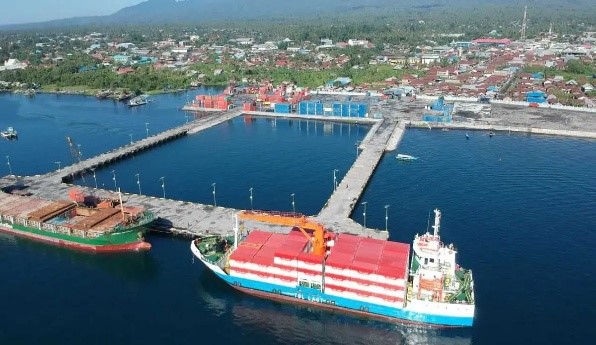
The development of the maritime industry is one of the important strategies in supporting national economic growth, especially in archipelagic countries such as Indonesia. This development includes the development of ports, coastal industrial estates, and marine infrastructure designed using a marine engineering approach. However, in addition to having a positive impact in the form of increasing economic activity and regional connectivity, the development of the maritime industry also has the potential to cause social exclusion for coastal local communities. Social exclusion can occur due to reduced public access to marine resources, changes in livelihoods, and changes in the coastal environment due to the development of marine infrastructure such as breakwater and reclamation. From the perspective of marine engineering, coastal development not only emphasizes the technical aspects of construction, but must also consider environmental and social impacts through the application of sustainable development concepts and integrated coastal area management. Therefore, the integration of marine engineering planning, environmental protection, and local community empowerment is key in creating sustainable and inclusive maritime industry development.
Downloads
References
L. P. Nielsen, K. H. Thomsen, C. Alleslev, S. Mikkelsen, and M. Holst, “Implementation of nutritional care in hospitals: A qualitative study of barriers and facilitators using implementation theory.,” Scand. J. Caring Sci., 2024, doi: 10.1111/scs.13255.
R. Zhang, Q. Gao, and K. Gao, “Impact of marine industrial agglomeration on the high-quality development of the marine economy——A case study of China’s coastal areas,” Ecol. Indic., 2024, doi: 10.1016/j.ecolind.2023.111410.
H. Grimmel, H. Calado, C. Fonseca, and J. S. De Vivero, “Integration of the social dimension into marine spatial planning – Theoretical aspects and recommendations,” Ocean Coast. Manag., 2019, doi: 10.1016/j.ocecoaman.2019.02.013.
T. A. Wibowo, M. Hamzah, and E. Sofilda, “Economic Impacts Of Port Development On Coastal Communities: A Vocational Education Perspective,” Int. J. Econ. Manag. Account., 2024, doi: 10.61132/ijema.v1i3.159.
K. Dafforn, M. Mayer‐Pinto, R. Morris, and N. Waltham, “Application of management tools to integrate ecological principles with the design of marine infrastructure.,” J. Environ. Manage., vol. 158, pp. 61–73, 2015, doi: 10.1016/j.jenvman.2015.05.001.
P. D. Da Silva, E. Fernandes, and G. Gonçalves, “Sustainable Development of Coastal Areas: Port Expansion with Small Impacts on Estuarine Hydrodynamics and Sediment Transport Pattern,” Water, 2022, doi: 10.3390/w14203300.
M. Sekar, “Impact of Port Infrastructure on Economic Development With Special Reference to Major Ports in India,” Manag. Account. J., 2023, doi: 10.33516/maj.v58i4.57-60p.
S. Perkol‐Finkel, T. Hadary, A. Rella, R. Shirazi, and I. Sella, “Seascape architecture – incorporating ecological considerations in design of coastal and marine infrastructure,” Ecol. Eng., 2017, doi: 10.1016/j.ecoleng.2017.06.051.
M. Tissier, “Unravelling the Relationship between Ecosystem-Based Management, Integrated Coastal Zone Management and Marine Spatial Planning,” Ecosyst. Manag. Ecosyst. Serv. Aquat. Biodivers., 2020, doi: 10.1007/978-3-030-45843-0_20.